Performances of Graduates, Benue State University (MOAUM)
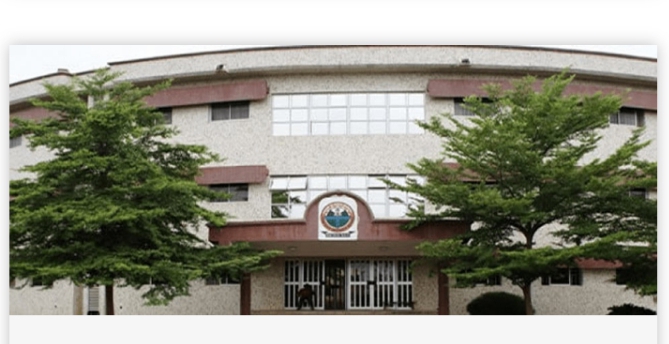
Benue State University (MOAUM – Moses Orshio Adasu University, Makurdi). was established in 1992 as a state-owned university in Makurdi, Benue State. It has expanded from a relatively small institution into one of the major universities in Nigeria.
Matriculation and convocation records as well as other institutional data provide insight into how students have achieved academically.
Available Graduation Statistics
Year
Number of Graduates
Details
2024
17,925
Combined 22nd, 23rd, and 24th convocation ceremonies
2022
316
Medical doctors graduated after accreditation issues were resolved
2015
5,210
Matriculated students (not graduates, but useful enrollment indicator)
2024 Admission Cycle
6,502
Newly matriculated students
2006
19,000+
Total student enrollment
2015
32,000
Estimated total university student population
2024 Combined Convocation Statistics
During the 22nd, 23rd, and 24th combined convocation ceremonies in 2024, the university graduated a total of 17,925 students. The breakdown included:
15,101 Bachelor’s degrees
72 Postgraduate Diplomas
2,196 Master’s degrees
556 PhD degrees
44 First Class graduates
This was one of the largest publicly reported graduation figures in the institution’s history.
Medical Graduates Statistics
The College of Health Sciences of BSU reported that 316 medical doctors graduated after years of accreditation and certification challenges were resolved. These graduates included:
257 males
59 females
The graduation followed a prolonged stagnation period affecting the MBBS programme between 2003/2004 and 2015.
Student Population
The university had:
Over 19,000 students in 2006
Around 32,000 students by 2015
Matriculation Statistics
Academic Session
Newly Admitted Students
2015
5,210
2023/2024
6,502
Observations on Graduate Trends
Several trends can be inferred from available data:
Graduate output has increased substantially over the years as the university expanded faculties and postgraduate programmes.
The introduction of new faculties such as Pharmaceutical Sciences, Architecture, Media and Communication Studies, and Technology-related disciplines contributed to rising graduation numbers.
Postgraduate education has become a significant component of BSU’s academic structure, as seen in the 2024 convocation where over 2,700 postgraduate degrees and diplomas were awarded.
Combined convocations suggest that some graduation ceremonies were delayed or merged, meaning annual statistics may not always correspond neatly to a single academic year.
Earlier Graduation Statistics
Convocation Year
Academic Sessions Covered
Total Graduates
Additional Details
2024
22nd–24th Combined Convocation
17,925
44 First Class graduates
2023
2018–2021 Sessions
23,060
63 First Class graduates
2022
Medical Programme Graduation
316
MBBS graduates after accreditation restoration
2019
Not fully published
Partial data unavailable publicly
Convocation held
Earlier Years (1990s–2010s)
Annual/combined sessions
No centralized public archive
Data scattered
2023 Combined Convocation Statistics
One of the largest earlier datasets available came from the university’s combined convocation ceremony held in February 2023. The ceremony covered graduates from the 2018, 2019, 2020, and 2021 academic sessions.
The university reported:
23,060 total graduands
20,815 Bachelor’s degrees
494 Postgraduate Diplomas
Remaining graduates consisted of Master’s and PhD recipients
63 students obtained First Class honours
The event also marked the university’s 30th anniversary celebration.
Institutional Expansion and Graduate Output
The university evolved from four initial faculties in 1992 into a much larger institution with multiple colleges and specialized programmes.
Newer faculties and schools contributed substantially to graduate growth, including:
Pharmaceutical Sciences
Architecture
Media and Communication Studies
Technology and Industrial Studies
Percentage of First Class Graduates at Benue State University
The most clearly documented figure available publicly is from the 2024 combined convocation ceremonies of Benue State University.
2024 Combined Convocation
Total graduates: 17,925
First Class graduates: 44
The percentage is calculated as:
Result:
\approx 0.245\%
So, approximately 0.25% of the graduates obtained First Class honours.
Interpretation
This means:
About 1 out of every 407 graduates earned a First Class degree.
The proportion is relatively low compared with many Nigerian private universities, where First Class rates are often much higher.
Public universities in Nigeria generally maintain stricter First Class grading distributions.
Comparison With Other Nigerian Universities
A 2026 report on Nigerian universities indicated that:
Many public universities average around 1%–3% First Class graduates.
Some private universities exceed 15%–20%.
Therefore, BSU’s reported rate of about 0.25% is notably conservative.
Important Context
The 2024 ceremony was a combined convocation covering the 22nd, 23rd, and 24th ceremonies rather than a single graduating class.
This may affect direct comparison with universities reporting annual statistics only.
Comparison of First Class Graduate Rates Across Nigerian Universities
Benue State University’s estimated First Class rate of approximately 0.25% is considerably lower than the rates reported by many other Nigerian universities, especially private institutions.
Comparative Statistics
University
First Class Graduates
Total Graduates
Approximate Percentage
Benue State University
44
17,925
0.25%
University of Lagos
617
10,584
5.8%
University of Ibadan
428
5,900
7.3%
Federal University of Technology Owerri
115
5,188
2.2%
Federal University of Agriculture Abeokuta
104
4,141
2.5%
Adekunle Ajasin University
62
6,837
0.9%
Covenant University
339
~1,615 estimated
~21%
Afe Babalola University
226
~1,614 estimated
~14%
Mathematical Comparison
Using BSU’s figure:
Compared with Covenant University:
This means Covenant University’s First Class rate is roughly:
\frac{21}{0.25} \approx 84
about 84 times higher than the reported BSU rate.
Public vs Private University Patterns
A major trend in Nigeria is the substantial gap between public and private universities in First Class distributions.
Available national analyses show:
Top private universities averaged roughly 17%
Public universities averaged roughly 3%
BSU’s reported rate is therefore:
far below the public university average,
and dramatically below elite private university rates.
Why Public Universities Often Have Lower First Class Rates
Several structural factors contribute to the disparity.
1. Larger Student Populations
Public universities often admit far more students than private universities. Large class sizes can reduce:
lecturer-to-student interaction,
continuous assessment quality,
mentoring opportunities.
BSU’s combined convocation involved nearly 18,000 graduates, which is massive by Nigerian standards.
2. Strikes and Academic Disruptions
Federal and state universities in Nigeria frequently experience:
ASUU strikes,
delayed academic calendars,
interrupted semesters,
infrastructural instability.
Research on Nigerian university strikes indicates these disruptions significantly affect academic continuity and performance.
3. Stricter Grading Culture
Many Nigerian public universities historically maintain conservative grading systems where:
Institutions such as Covenant University have built reputations around intensive academic management and performance systems.
Debate About Grade Inflation
The rapid growth in First Class graduates from private universities has generated debate in Nigeria.
The Academic Staff Union of Universities (ASUU) publicly questioned the increasing number of First Class graduates being produced by private universities.
Critics argue that:
grading standards may be softer,
academic pressure differs,
universities may use high classifications for institutional branding.
Supporters counter that:
better infrastructure,
stable calendars,
stronger supervision,
modern learning systems
naturally improve student performance.
International Context
Even internationally, First Class degree inflation has become a major issue.
In the United Kingdom:
only about 8% earned First Class degrees in the early 1990s,
by 2024–2025, around 30% of graduates obtained First Class honours.
This shows that the debate around grading standards is not unique to Nigeria.
Position of Benue State University
Based on available data, Benue State University appears to belong to the group of Nigerian public universities with:
highly restrictive First Class grading,
relatively conservative classification standards,
lower proportions of top-degree awards.
Its approximate 0.25% rate is among the lowest publicly reported figures currently available in Nigeria.
Universities Ranked by Number of First Class Graduates in Nigeria RankUniversityFirst Class GraduatesTotal GraduatesApproximate Rate1Federal University of Technology Akure519—8%2University of Ibadan428~5,9007.3%3University of Benin385—2%4University of Lagos340~10,5843%–5.8%5Covenant University339~1,61521%6Afe Babalola University226~1,61414%7University of Uyo17412,4501.4%8Usmanu…
Adamawa State University. List of accredited courses The accredited courses in Adamawa State University are: AccountingBanking And FinanceBiochemistryBiomedical EngineeringBotanyBusiness AdministrationChemistryComputer & Information ScienceComputer EngineeringCriminology & Security StudiesEconomicsGeologyIndustrial…
Achievers University Owo, Ondo State. List of accredited courses AccountingBanking And FinanceBiochemistryBiomedical EngineeringBotanyBusiness AdministrationChemistryComputer & Information ScienceComputer EngineeringCriminology & Security StudiesEconomicsGeologyIndustrial ChemistryInternational RelationsLawMass CommunicationMathematicsMechatronics EngineeringMedical Laboratory ScienceMicrobiologyNursing SciencePhysics And…
Abia State University list of accredited courses Accredited courses in Abia State University are: AccountingAgricultural ScienceAnatomyArchitectureBanking And FinanceBiochemistryBotanyBuildingBusiness StudiesChemistryCivil EngineeringComputer EngineeringComputer ScienceEconomicsEducation /MathematicsEducation Management & PlanningEducation/AccountingEducation/Agricultural ScienceEducation/BiologyEducation/Business…
Yobe State University, Damaturu LocationKM 7, Sir Kashim Ibrahim WayP.M.B. 1144Damaturu Graduates at the university’s maiden convocation ceremony The noble idea of establishing a…
Lagos State University (LASU) Lagos State University (LASU), located at Ojo, was established as a Public University in 1983 by the enabling law of…
Edo State University, Uzairue Km7, Auchi-Abuja Road, Iyamho-Uzairue Edo State, Nigeria. Edo State University Uzairue (formerly Edo University Iyamho), was established by the Edo University…
Nasarawa State University, Keffi The University Was established under the Nasarawa State Law No. 2 of 2001 (see 2.2) as passed by the State…
How Nasarawa State University started NASARAWA STATE UNIVERSITY, KEFFI, Was established under the Nasarawa State Law No. 2 of 2001 (see 2.2) as passed by…