List of Zambia’s 30 Cabinet Ministers and 10 Provincial Ministers
President Edgar Lungu’s Appointment of 30 Cabinet Ministers and 10 Provincial Ministers
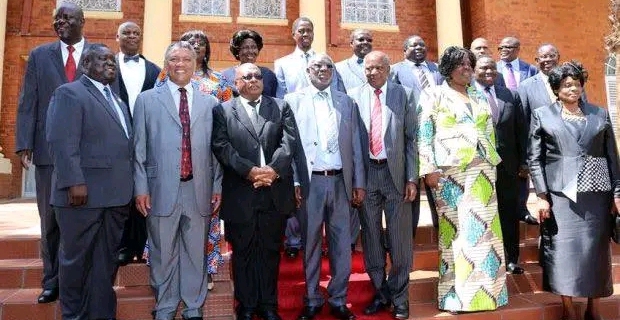
President Edgar Lungu’s formation of his Cabinet—comprising 30 Ministers and 10 Provincial Ministers—marked a significant step in structuring Zambia’s governance priorities under Article 116 (1)(2) of the Constitution. This configuration reflected a strategic alignment of national development goals with ministerial expertise, ensuring that key sectors such as finance, health, infrastructure, agriculture, energy, and education were placed under experienced leadership.
This article provides an in-depth, structured overview of the appointed ministers, the importance of each ministry, and the broader implications for Zambia’s administrative and developmental trajectory.
National Cabinet Ministers: Roles and Strategic Importance
1. Finance – Felix Mutati
Felix Mutati’s appointment placed him at the helm of economic management, budget policy, fiscal responsibility, and debt strategy. The Ministry of Finance traditionally oversees macroeconomic stability, investment climate improvement, and public financial oversight—critical areas for Zambia’s long-term growth.
2. Commerce and Industry – Margaret Mwanakatwe
Given Zambia’s drive toward industrial diversification and SME development, Mwanakatwe’s role involved shaping trade policy, strengthening industrial competitiveness, and creating an enabling business environment.
3. Foreign Affairs – Harry Kalaba
Tasked with representing Zambia on the international stage, Kalaba managed diplomatic relations, regional integration within SADC, and foreign policy formulation.
4. Health – Dr. Chitalu Chilufya
Dr. Chilufya oversaw national healthcare delivery, hospital administration, disease prevention strategies, and public health programs—especially crucial in improving national health indicators.
5. National Planning – Lucky Mulusa
A pivotal ministry focused on development planning, long-term national strategies, and monitoring implementation of Zambia’s development frameworks.
6. Defence – Davies Chama
Responsible for national security, military readiness, and defence policy.
7. Labour and Social Security – Joyce Nonde
Nonde guided labour relations, employment standards, pension systems, and worker protections.
8. Home Affairs – Stephen Kampyongo
Oversaw domestic security, immigration, policing, and internal administration.
9. Agriculture – Dora Siliya
Siliya’s position covered food security, crop diversification, livestock development, and agricultural export policy.
10. Local Government – Vincent Mwale
Local governance, municipal infrastructure, and decentralization policies were under Mwale’s leadership.
11. Chiefs and Traditional Affairs – Lawrence Sichalwe
Focused on traditional governance systems, cultural preservation, and engagement with customary authorities.
12. Lands – Jean Kapata
Handled land allocation, management systems, and land reform.
13. Gender – Victoria Kalima
Responsible for gender equality policies, women empowerment programs, and national strategies against gender-based violence.
14. Higher Education – Nkandu Luo
Oversaw universities, tertiary institutions, research policy, and educational reform.
15. Youth and Sport – Moses Mawere
Mawere’s portfolio included youth empowerment, skills development, and national sports programs.
16. General Education – Dennis Musuku Wanchinga
Managed basic and secondary education, curriculum reform, and school infrastructure.
17. Information and Broadcasting – Chishimba Kambwili
Responsible for media policy, national broadcasting, and public communication.
18. Justice – Given Lubinda
Oversaw legal reforms, judiciary policy, and constitutional matters.
19. Mines and Mineral Development – Christopher Yaluma
A critical ministry due to Zambia’s mining-driven economy, covering mining regulation, exploration, and mineral resource management.
20. Communication and Transport – Brian Mushimba
Managed ICT policy, postal systems, road transport, aviation, and communication infrastructure.
21. Tourism and Arts – Charles Banda
Handled tourism development, cultural preservation, and arts promotion.
22. Infrastructure – Ronald Chitotela
Oversaw roads, bridges, public buildings, and national construction projects.
23. Energy – David Mabumba
Tasked with electricity policy, energy diversification, and fuel sector oversight.
24. Fisheries and Livestock – Michael Katambo
Focused on livestock development, fish farming, and sectoral modernization.
25. Presidential Affairs – Freedom Sikazee
Facilitated coordination of government operations directly connected to the Presidency.
26. Office of the Vice President – Sylvia Bambala Chalikosa
Managed disaster response systems, humanitarian programs, and high-level administrative support.
27. Water Development and Sanitation – Lloyd Mulenga Kaziya
Oversaw water supply systems, sanitation projects, and clean water policies.
28. National Guidance – Rev. Godfridah Sumaila
Promoted national values, ethics policies, and civic responsibilities.
29. Works and Supply – Mathew Nkhuwa
Handled government assets, public procurement systems, and maintenance of state facilities.
30. Community Development – Emerine Kabanshi
Focused on social welfare programs, poverty reduction, and community-level empowerment projects.
Provincial Ministers: Strengthening Local Governance
The ten Provincial Ministers provided leadership across Zambia’s regions, serving as key links between central government and local administrative structures.
Central Province – Sydney Mushanga
Copperbelt Province – Bowman Lusambo
Luapula Province – Nixon Chilangwa
Muchinga Province – Malozo Sichone
Northern Province – Brian Mundubile
Eastern Province – Makebi Zulu
Lusaka Province – Japhen Mwakalombe
North-Western Province – Richard Kapita
Southern Province – Edify Hamukale
Western Province – Nathaniel Mubukwanu
Provincial Ministers act as coordinators of regional development programs, implementers of national policies, and representatives of local interests in the central government.
Broader Implications of the Cabinet Structure
President Lungu’s appointments demonstrated strategic attempts to:
Balance political representation across regions
Place critical economic sectors under seasoned leadership
Strengthen governance structures through specialized ministries
Enhance sector-specific development such as energy, mining, education, and infrastructure
Improve decentralization through empowered Provincial Ministers
This Cabinet structure laid the foundation for reforms, economic stability efforts, and governance continuity.
The appointment of 30 Cabinet Ministers and 10 Provincial Ministers by President Edgar Lungu represented a structured and deliberate approach to national governance. Each ministry plays a vital role in Zambia’s development architecture, and the appointed leaders were positioned to implement key policies, manage national resources, and support long-term socio-economic progress.
World Heritage Site in Zambia UNESCO World Heritage Site in Zambia is: Mosi-oa-Tunya / Victoria Falls > View other UNESCO World Heritage Sites More on…
List of Ministers in Trinidad and Tobago A look at the Government of Trinidad and Tobago under Prime Minister Kamla Persad-Bissessar, as sworn in following the 2025…
LIST OF ALL MINISTERS AND POTFOLIOUS Here’s the list of Nigeria’s ministers appointed by President Bola Tinubu in 2024, along with their portfolios: Bosun Tijani -…
Ethiopia Ministers List Ethiopia’s Leadership, Cabinet Ministers: List of Government Officials Ethiopia is a federal parliamentary republic in which executive authority is exercised…
List of Ministers in Ethiopia The President of Ethiopia is Taye Atske Selassie while the Prime Minister: Dr. Abiy Ahmed. Tagese Chafo is Speaker of…
List of Ministers of Education in Nigeria, from 1958 Nigeria’s Ministers of Education since 1958 when the Federal Ministry of Education was created are: NameDurationPartyAja Nwachukwu1958 – 1965NCNCRichard Akinjide1965…
List of Burkina Faso ministers List of Burkina Faso government ministers, 2024 His Excellency Sir Appolinaire Joachimson KYELEM of TambélaThe Prime Minister Colonel Major Kassoum…
List of ministers in Algeria The ministers in Algeria, under President Abdelmadjid Tebboune, as of December 2023, are: Ahmed AttafMinister of Foreign Affairs and the…