The Adamawa-Ubangi languages form one of the most fascinating and diverse branches of the Niger-Congo phylum. Spoken predominantly in Central Africa, these languages represent centuries of cultural interaction, migration, and linguistic evolution. Found across eastern Nigeria, central Cameroon, southern Chad, the Central African Republic, northern Democratic Republic of the Congo, and southwestern Sudan, this language family plays a vital role in the daily lives of millions.
With approximately 150 distinct languages and nearly 12 million native speakers, the Adamawa-Ubangi languages are not only numerous but also structurally rich. Several members—such as Banda, Zande, Ngbaka, and Gbaya—each boast more than one million speakers, underscoring their regional importance.
Linguistically, Adamawa-Ubangi languages offer valuable insight into tone systems, noun class remnants, verbal extensions, and syntactic patterns that distinguish them within the broader Niger-Congo family.
External Classification of Adamawa-Ubangi Languages
Position Within the Niger-Congo Phylum
The Adamawa-Ubangi languages belong to the vast Niger-Congo phylum, one of the world’s largest language families. Their external classification follows this hierarchy:
Niger-Congo
Volta-Congo
North Volta-Congo
Adamawa-Ubangi
This placement highlights their close relationship with neighboring language groups, particularly the Gur languages, another branch of Niger-Congo. Linguists have long noted shared grammatical and phonological traits between Adamawa-Ubangi and Gur languages, suggesting deep historical connections.
Geographical Distribution Across Central Africa
Where Adamawa-Ubangi Languages Are Spoken
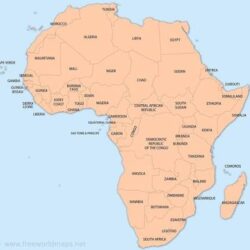
The Adamawa-Ubangi languages are widespread across Central Africa, covering a large and culturally diverse region. Major areas include:
Eastern Nigeria
Central and northern Cameroon
Southern Chad
Central African Republic
Northern Democratic Republic of the Congo
Southwestern Sudan
This broad distribution reflects centuries of population movement, trade routes, and social interaction. Despite national borders, many Adamawa-Ubangi languages form dialect continua, where neighboring varieties remain mutually intelligible.
Internal Classification of Adamawa-Ubangi Languages
Internally, Adamawa-Ubangi languages are divided into two primary groups:
Adamawa
Ubangi
Together, these groups account for approximately 150 languages, each with unique traits yet sharing core structural features.
The Adamawa Group: Structure and Diversity
Overview of the Adamawa Group
The Adamawa group is primarily spoken in Nigeria, Cameroon, and Chad. It includes around 90 languages divided into 16 distinct subgroups, making it the larger of the two branches.
Subgroups of the Adamawa Languages
Below is a structured overview of the Adamawa subgroups:
No.
Adamawa Subgroup
Approx. Languages
1
Waja
8
2
Leeko
4
3
Duru
20
4
Mumuye
9
5
Mbum
15
6
Yungur
6
7
Kam (Nyimwom)
—
8
Jen
2
9
Logunda (Longuda)
—
10
Fali
—
11
Nombari (Nimbari)
—
12
Bua
9
13
Kim
—
14
Day
—
15
Burak
6
16
Kwa (Baa)
—
Major Adamawa Languages
The two largest Adamawa languages are:
Mumuye (Nigeria): ~500,000 speakers
Tupuri (Cameroon & Chad): ~250,000 speakers
These languages serve as regional communication tools and carry strong cultural traditions.
The Ubangi Group: Core Languages and Reach
Overview of the Ubangi Group
The Ubangi group is spoken mainly in the Central African Republic, northern Democratic Republic of the Congo, and southwestern Sudan. It consists of roughly 40 languages, grouped into six major clusters.
Subgroups of the Ubangi Languages
No.
Ubangi Subgroup
Approx. Languages
1
Gbaya
4
2
Banda
16
3
Ngbandi
—
4
Sere
6
5
Ngbaka-Mba
9
6
Zande
5
Largest Ubangi Languages
The most widely spoken Ubangi languages include:
Banda
Zande
Ngbaka
Gbaya
Each of these languages has over one million speakers, making them key linguistic forces in Central Africa.
Sango: A Lingua Franca Rooted in Adamawa-Ubangi
One of the most influential languages associated with this family is Sango, a Ngbandi-based creole.
Native speakers: ~400,000
Second-language users: 4 million+
Sango functions as a lingua franca in the Central African Republic and parts of the Democratic Republic of the Congo. Its widespread use demonstrates how Adamawa-Ubangi languages adapt and thrive in multilingual environments.
Shared Linguistic Features of Adamawa-Ubangi Languages
Phonological Characteristics
Adamawa-Ubangi languages share several distinctive phonological traits:
Vowel systems typically contain five or seven vowels: i, e, ɛ, a, u, o, ɔ
Vowel harmony is common across many languages.
In Adamawa languages, any consonant may appear word-initially, but medial and final positions are more restricted.
Prenasalized stops and fricatives are frequent.
Implosive consonants occur in some languages.
All Adamawa-Ubangi languages are tonal, with two to four contrastive tones.
Tone plays a crucial role in distinguishing meaning, grammatical function, and emphasis.
Morphological Features
Morphology in Adamawa-Ubangi languages reveals both innovation and historical residue:
Remnants of noun class systems exist, especially in Adamawa languages.
Unlike many Niger-Congo languages, noun classes are often marked by suffixes rather than prefixes.
Inflectional morphemes tend to be prefixes.
Derivational morphemes are usually suffixes.
Verbal systems focus more on aspect (perfective vs. imperfective) than tense.
Verbal extensions convey meanings such as:
Iterative
Intensive
Benefactive
Causative
Syntactic Structure
The syntax of Adamawa-Ubangi languages is relatively consistent:
Basic word order: Subject–Verb–Object (SVO)
Modifiers (adjectives, genitives, demonstratives, numerals) follow the noun
Prepositions are used rather than postpositions
Interrogative markers appear at the end of sentences
Negative markers occur at the end of clauses
This structure supports clarity and predictability in sentence construction.
FAQs About Adamawa-Ubangi Languages
1. What are Adamawa-Ubangi languages?
Adamawa-Ubangi languages are a branch of the Niger-Congo language family spoken mainly in Central Africa.
2. How many Adamawa-Ubangi languages exist?
There are approximately 150 languages divided between the Adamawa and Ubangi groups.
3. Which Adamawa-Ubangi languages have the most speakers?
Banda, Zande, Ngbaka, and Gbaya each have over one million speakers.
4. Is Sango an Adamawa-Ubangi language?
Sango is a creole based on Ngbandi, an Ubangi language, and serves as a regional lingua franca.
5. Are Adamawa-Ubangi languages tonal?
Yes, all Adamawa-Ubangi languages use tone to distinguish meaning.
6. How are Adamawa-Ubangi languages related to Gur languages?
They share structural similarities and likely historical connections within the Niger-Congo phylum.
Why Adamawa-Ubangi Languages Matter
The Adamawa-Ubangi languages represent a powerful linguistic heritage shaped by geography, culture, and history. Their wide distribution, rich grammatical systems, and millions of speakers make them essential to understanding Central Africa’s linguistic landscape. From regional languages like Mumuye and Zande to the widely used Sango, these languages continue to evolve while preserving deep cultural roots.
As linguistic research advances, Adamawa-Ubangi languages remain central to studies of African linguistics, language contact, and human communication.
List of Brazil Languages List of the languages spoken in Brazil, grouped by status and usage Official / National Language Portuguese (Brazilian Portuguese) —…
Languages of Bosnia and Herzegovina Language in Bosnia and Herzegovina is closely tied to history, identity, and politics. While the country is linguistically unified in…
Bolivia 37 Official Languages and Others Official Languages of Bolivia (37) (Recognized by the 2009 Constitution) Spanish (Castilian) Aymara Quechua Araona Baure Bésiro (Chiquitano) Canichana Cavineño…
List of Bhutan Languages Bhutan is a small yet remarkably diverse Himalayan kingdom nestled between China and India. Despite its modest population and land…
Languages in Angola The languages in Angola are Portuguese and those originally spoken by the different ethnic groups. Portuguese was introduced during the…
List of languages in Angola by province The languages in Angola according to province are: ProvinceLanguageBengoKimbundu, KikongoBenguelaUmbundu, OhvanyanekaEndUmbundu, CokweCabindaFiote, KikongoCuando CubangoNganguelaCuanza NorteKimbunduKwanza SulKimbundu, UbunduCuneneOshiwamboHuamboUmbunduHuilaOlunhaneka, UmbunduLuandaKimbunduLunda NorteCokweLunda SouthCokweMalanjeKimbunduMoxicoCokwe,…