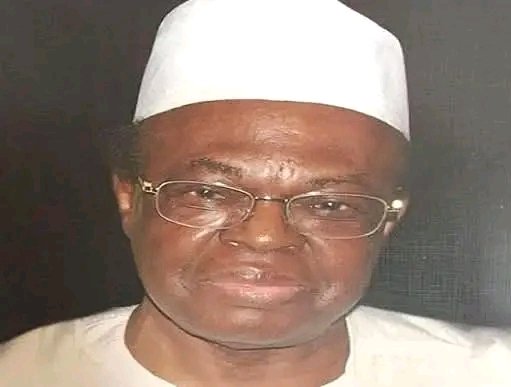
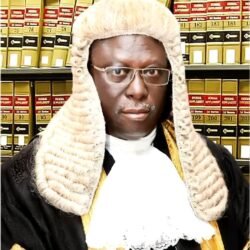
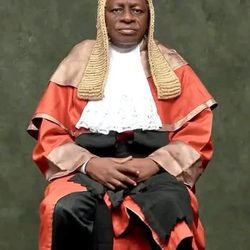
Justice George Idenyi Uloko: A Life of Judicial Excellence and Public Service
Honourable Justice George Idenyi Uloko, Officer of the Order of the Niger (OON), was a distinguished Nigerian jurist, legal administrator, mentor, and community leader whose life and career were defined by an enduring commitment to justice, public service, professional excellence, and the development of the judiciary. A proud son of the Idoma people of Benue State, he rose through the ranks of the legal profession to become Chief Judge of Plateau State, a position in which he provided judicial leadership for many years. Following his retirement from the state judiciary, he continued to serve the nation, culminating in his appointment as Chief Commissioner of the Nigerian Public Complaints Commission.
His remarkable journey from a young student in Utonkon to the highest judicial office in Plateau State reflects a life devoted to learning, discipline, leadership, and service to humanity.
Early Life and Family Background
Justice George Idenyi Uloko was born on April 23, 1941, into the family of Mr. and Mrs. Ada Uloko in Ukwonyo, Utonkon, in present-day Ado Local Government Area of Benue State. He belonged to the Idoma ethnic group and maintained a strong connection to his cultural heritage and ancestral community throughout his life.
His formative years were shaped by the values of education, discipline, and perseverance. These principles would become defining features of his personal character and professional career, guiding him through the various responsibilities he undertook in the legal profession, government administration, and the judiciary.
Although his career took him beyond his home state, his origins remained an important part of his identity. His life stands as a source of pride to his family, the people of Utonkon, the wider Idoma community, and the legal profession.
Educational Foundation and Legal Training
Justice Uloko began his formal education at St. Paul’s Catholic School, Utonkon, where he studied from 1949 to 1954. His early education provided the foundation for the academic journey that would eventually lead him into the legal profession.
After obtaining his First School Leaving Certificate, he proceeded to Mount St. Michael’s Secondary School, Aliade, where he earned the West African School Certificate. His determination to pursue further education led him to St. John’s College, Kaduna, in 1963, where he obtained the Higher School Certificate (HSC).
In 1965, he gained admission to Ahmadu Bello University, Zaria, to study law. He graduated with a Bachelor of Laws (LL.B. Honours) degree in 1968, marking a significant milestone in his academic development. He subsequently attended the Nigerian Law School in Lagos, where he obtained his Barrister-at-Law qualification in 1969.
These academic achievements equipped him with the intellectual foundation and professional training required for a demanding career in law. They also prepared him for the diverse responsibilities he would later undertake in legal drafting, government administration, private legal practice, and judicial leadership.
Early Career in Public Service
Following his university education, Justice Uloko began his professional career in public service under the then Benue-Plateau State Government. He was employed as a pupil state counsel on July 29, 1968, thereby commencing a journey that would take him through several important legal and administrative positions.
In recognition of the importance of specialised legal expertise, he was sent to Kaduna in 1972 for training in legal drafting. In the same year, he was assigned to serve as legal adviser to the Central Water Transportation Company in Onitsha, an organisation reportedly jointly owned by six state governments.
His professional development continued in 1973 and 1974, when he undertook further training in legal drafting in London. These experiences broadened his understanding of legislative processes and legal documentation, equipping him with skills that would prove valuable throughout his career.
Following the creation of Benue State in 1976, Justice Uloko was posted to Makurdi, where he served as Permanent Secretary and Solicitor-General. His responsibilities placed him at the centre of legal administration during an important period in the development of the newly established state.
Between 1977 and 1978, he was sponsored to attend an Advanced Administrative Officer’s Course at the University of Pittsburgh in the United States. The programme further strengthened his administrative capacity and complemented his legal expertise.
Through these assignments and professional development opportunities, Justice Uloko acquired a combination of legal, legislative, and administrative experience that distinguished him as a versatile public servant.
Transition to Private Legal Practice
In 1980, Justice Uloko left public service and ventured into private legal practice. This transition provided him with an opportunity to broaden his professional experience and engage with the law from a different perspective.
His departure from government, however, did not signify a withdrawal from public affairs. Rather, it preceded another significant chapter in his career.
In April 1984, the Plateau State Government appointed him Attorney-General and Commissioner for Justice. The appointment reflected the confidence placed in his legal expertise, administrative experience, and capacity for leadership.
As the state’s chief law officer, he assumed responsibility for advising the government on legal matters and contributing to the administration of justice. His experience in legal drafting and public administration provided a strong foundation for the responsibilities of the office.
His appointment also marked an important turning point in his professional journey, bringing together the knowledge and experience he had accumulated in government service and private practice.
Chief Judge of Plateau State: A Defining Chapter
In May 1985, Justice Uloko attained one of the highest milestones in his professional career when he assumed office as Chief Judge of Plateau State. His appointment placed him at the head of the state’s judiciary, with responsibilities extending to judicial leadership, the administration of justice, and the development of judicial institutions.
He remained in office until his retirement on December 30, 2002. Based on these dates, his tenure lasted approximately 17 years and seven months, although some accounts describe it as 19 years. The precise duration should be confirmed against official judicial records.
His long years on the bench constituted a defining period in his public life. As head of the judiciary, he occupied a position of considerable responsibility at a time when effective judicial administration and institutional development were essential to the delivery of justice.
Justice Uloko was remembered as an experienced and charismatic judicial officer whose professional conduct and leadership influenced younger members of the legal profession. His career demonstrated the importance of sound legal knowledge, administrative competence, discipline, and an appreciation of the judiciary’s constitutional responsibilities.
His leadership also coincided with significant changes in the administrative and political structure of the region, including the creation of Nasarawa State in 1996. Such developments formed part of the broader institutional environment within which the judiciary continued to evolve.
Beyond his formal responsibilities, Justice Uloko’s influence extended to the professional development of legal practitioners and judicial officers. His experience across several areas of law and public administration gave him a broad perspective on the justice system and the demands of judicial leadership.
Mentorship and Contribution to the Legal Profession
One of the enduring aspects of Justice Uloko’s legacy was his role as a mentor to younger legal professionals. He was regarded by those who knew and worked with him as a source of professional guidance and inspiration.
His career illustrated the value of combining academic preparation with practical experience, professional discipline, and a commitment to public responsibility. From legal drafting and government administration to private practice and judicial leadership, he developed a breadth of experience that offered important lessons to younger generations of lawyers.
His years in the Ministry of Justice and on the judicial bench placed him in a position to appreciate the institutional and human dimensions of the justice system. He understood that the effectiveness of the judiciary depends not only on its formal structures but also on the competence, integrity, and dedication of the individuals who serve within it.
Through his professional example and interaction with colleagues, he contributed to the continuing development of the legal community. His influence, therefore, cannot be measured solely by the offices he occupied or the number of years he served. It must also be understood in terms of the people he guided, the institutions he helped lead, and the professional standards he represented.
For aspiring lawyers and judicial officers, his life offers an example of the opportunities that education, perseverance, experience, and service can create.
National Recognition: Officer of the Order of the Niger
In recognition of his contributions to the legal profession and public service, Justice Uloko received the national honour of Officer of the Order of the Niger (OON).
The honour represented national recognition of his professional journey and the responsibilities he undertook in the service of Nigeria. It also formed part of the public acknowledgement of a career that spanned government legal administration, private practice, judicial leadership, and national public service.
For his family, community, and professional associates, this recognition was an important testament to a life devoted to public responsibility and the pursuit of professional excellence.
Appointment as Chief Commissioner of the Public Complaints Commission
Even after retiring from the Plateau State judiciary, Justice Uloko continued to contribute to national life.
On February 23, 2012, he was appointed Chief Commissioner of the Nigerian Public Complaints Commission by the Federal Government under the administration of President Goodluck Ebele Jonathan, GCFR.
The Public Complaints Commission is a national institution charged with investigating complaints concerning administrative actions and alleged injustices involving public institutions and other organisations within its jurisdiction. Its work is directed towards promoting administrative accountability, addressing grievances, and providing members of the public with a channel through which complaints may be examined.
Justice Uloko’s appointment brought his extensive experience in law, public administration, and judicial leadership to an institution concerned with fairness and accountability in public affairs.
The appointment represented a continuation of his longstanding engagement with public service. Having served in state government, held the office of Attorney-General and Commissioner for Justice, and led the Plateau State judiciary, he brought considerable professional experience to this national assignment.
His return to public responsibility after retirement demonstrated that his commitment to service extended beyond the formal years of judicial office.
Retirement, Faith, and Community Service
Following his retirement from the Plateau State judiciary on December 30, 2002, Justice Uloko returned to his hometown of Utonkon in Benue State.
His return to his ancestral community marked a new phase of life after decades of demanding professional responsibilities. Rather than viewing retirement solely as a period of personal rest, he remained engaged in activities that reflected his enduring interest in service and the welfare of others.
He was remembered as a devout Christian whose faith played an important role in his personal life and community engagement. His involvement in evangelism reflected his religious convictions and his desire to continue making a meaningful contribution to society beyond formal public office.
His life in retirement also underscored the importance of remaining connected to one’s roots. Despite the professional responsibilities that had taken him to different parts of Nigeria and beyond, his connection to Utonkon and the Idoma community remained a significant part of his identity.
For a man whose career had been devoted to the administration of law and justice, this period represented a transition towards a more personal expression of service through faith, community engagement, and continued involvement in the lives of others.
Final Days and Passing
While serving as Chief Commissioner of the Public Complaints Commission, Justice Uloko reportedly took ill. He died on June 16, 2016, in Makurdi, Benue State, at the age of 75.
His passing marked the end of a distinguished career that had taken him from the early stages of legal training to senior positions in government, the judiciary, and national public administration.
He left behind a legacy shaped by decades of professional service and a commitment to the institutions in which he worked. His journey encompassed legal drafting, public administration, private legal practice, service as Attorney-General and Commissioner for Justice, leadership of the Plateau State judiciary, and his final national assignment at the Public Complaints Commission.
His death was not merely the loss of a former Chief Judge or senior public servant; it was the passing of a man whose life represented years of experience, professional growth, mentorship, and service to society.
A Lasting Legacy of Service and Excellence
The life of Honourable Justice George Idenyi Uloko, OON, remains a story of determination, professional advancement, judicial leadership, and dedication to public service.
From his early education in Utonkon to his legal training at Ahmadu Bello University and the Nigerian Law School, his journey reflected a sustained pursuit of knowledge and excellence. His subsequent work in government legal administration, private practice, and the Ministry of Justice prepared him for the historic responsibility of leading the Plateau State judiciary.
His appointment as Chief Commissioner of the Public Complaints Commission later demonstrated that his experience and commitment to service remained valuable long after his retirement from the bench.
For the Idoma people of Benue State, Justice Uloko remains a notable son whose professional achievements brought distinction to his community. For Plateau State, his long tenure as Chief Judge forms an important part of the state’s judicial history. For the wider Nigerian legal profession, his career offers a compelling example of professional development, institutional leadership, and the responsibilities that accompany public office.
His legacy also lives on in the legal practitioners and judicial officers he influenced, the institutions in which he served, and the example he set through his commitment to law, administration, faith, and community engagement.
Ultimately, the measure of Justice George Idenyi Uloko’s life lies not only in the titles he held or the positions he occupied, but also in the enduring significance of a life devoted to service. His journey reminds us that true distinction is achieved when knowledge is combined with responsibility, authority with integrity, and professional success with a commitment to the common good.
Justice George Idenyi Uloko
May the memory of Honourable Justice George Idenyi Uloko, OON, continue to inspire generations of lawyers, judicial officers, public servants, and members of the community. May his life of service remain a source of pride to his family, the people of Utonkon, the Idoma nation, and Nigeria at large.
LAWRENCE ANINI AND GEORGE IYAMU Lawrence Anini, a notorious armed robber and his gang were assisted by George Iyamu, a corrupt policeman, to terrorize Nigeria…
A BRIEF PROFILE OF SENATOR GEORGE AKUME Senator George Akume is a prominent Nigerian politician and former civil servant. Born on December 27, 1953, in Wannune, Benue…
George Akume George Akume (born 27 December 1953) is the Secretary to the Federal Government (SGF) of the Federal Republic of Nigeria. He…
Elmina/St George’s Castle St George’s Castle, a Unesco heritage site, was built as a trading post by the Portuguese in 1482, and captured…
Salary Structures in Nigeria Public Service The Nigerian public service salary system has a structured approach, organized into different consolidated salary structures tailored for specific sectors…