Uzbekistan’s Most Populated Regions, Cities and Towns (2026 Census Ranking)
Uzbekistan’s preliminary 2026 census, its first in 37 years, counted 39,047,321 people as of 15 January 2026. That is about 9 million more than the 29,993,500 estimated for 2013 (+30%) and 810,617 above the official estimate of 38,236,704 made at the start of 2026. The country covers 448,971 km², an average density of about 87 people per km². Regional figures below are preliminary 2026 census results; city and town figures are the statistics committee’s estimates for 1 January 2025 (2013 figures are estimates too).
Population is packed into the east
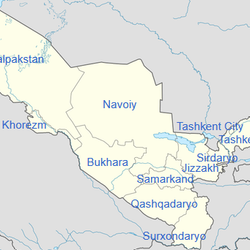
Samarkand, Fergana and Tashkent regions top the ranking, and the three Fergana Valley regions (Andijan, Fergana, Namangan) together hold about 10.9 million people, roughly 28% of the country. Five of the ten largest cities (Namangan, Andijan, Fergana, Kokand and Margilan) sit in that valley.
The west is the opposite. Karakalpakstan covers 166,594 km², about 37% of the national territory, but has 2.15 million people, around 13 per km². Navoiy region, at 111,090 km², has just 1.18 million.
Regions ranked by population (2026)
Rank
Region
Area (km²)
Estimate 2013
Census 2026 (prelim.)
Change since 2013
1
Samarqand (Samarkand)
16,770
3,380,900
4,404,575
+30%
2
Farg’ona (Fergana)
6,760
3,329,700
4,238,911
+27%
3
Toshkent (Tashkent region)
15,135
2,695,700
3,763,093
+40%
4
Qashqadaryo (Kashkadarya)
28,570
2,831,300
3,692,323
+30%
5
Andijon (Andijan)
4,300
2,756,400
3,531,777
+28%
6
Toshkent shahri (Tashkent City)
449
2,340,900
3,224,838
+38%
7
Namangan
7,440
2,458,700
3,149,161
+28%
8
Surxondaryo (Surkhandarya)
20,100
2,260,600
2,984,084
+32%
9
Qoraqalpog’iston (Karakalpakstan)
166,594
1,711,800
2,149,932
+26%
10
Xorazm (Khorezm)
6,050
1,653,800
2,140,746
+29%
11
Buxoro (Bukhara)
40,221
1,729,700
2,104,874
+22%
12
Jizzax (Jizzakh)
21,209
1,205,000
1,524,055
+26%
13
Navoiy (Navoi)
111,090
888,400
1,184,591
+33%
14
Sirdaryo (Syrdarya)
4,280
750,600
954,361
+27%
Uzbekistan
448,971
29,993,500
39,047,321
+30%
Tashkent City is the smallest unit by area (449 km²) but ranks sixth by population. The statistics committee notes that its growth is partly caused by boundary changes, so its +38% should be read with care. Buxoro grew slowest (+22%), while Toshkent region (+40%) grew fastest. The census also revised Tashkent region’s pre-census estimate of about 3.2 million up to nearly 3.8 million, lifting it from seventh to third place among the 14 territories.
The ten largest cities
Tashkent, the capital, is more than four times the size of Uzbekistan’s second city. Namangan has overtaken Samarkand to rank second.
Rank
City
Region
Estimate 2025
1
Toshkent (Tashkent)
Tashkent City
3,112,748
2
Namangan
Namangan
713,385
3
Samarqand (Samarkand)
Samarqand
595,818
4
Andijon (Andijan)
Andijon
492,425
5
Nukus
Karakalpakstan
344,690
6
Farg’ona (Fergana)
Farg’ona
328,409
7
Qo’qon (Kokand)
Farg’ona
313,597
8
Qarshi (Karshi)
Qashqadaryo
300,777
9
Buxoro (Bukhara)
Buxoro
274,800
10
Marg’ilon (Margilan)
Farg’ona
257,878
Top 25 cities and towns (2025 estimates)
Rank
City / town
Region
Estimate 2013
Estimate 2025
1
Toshkent
Tashkent City
2,340,900
3,112,748
2
Namangan
Namangan
468,000
713,385
3
Samarqand
Samarqand
504,300
595,818
4
Andijon
Andijon
398,200
492,425
5
Nukus
Karakalpakstan
289,000
344,690
6
Farg’ona
Farg’ona
261,400
328,409
7
Qo’qon
Farg’ona
230,400
313,597
8
Qarshi
Qashqadaryo
250,700
300,777
9
Buxoro
Buxoro
247,500
274,800
10
Marg’ilon
Farg’ona
212,200
257,878
11
Termiz (Termez)
Surxondaryo
135,800
207,326
12
Jizzax
Jizzax
161,400
199,942
13
Angren
Toshkent
172,800
185,501
14
Chirchiq
Toshkent
147,500
175,500
15
Navoiy
Navoiy
134,300
166,492
16
Urganch
Xorazm
136,600
155,690
17
Shahrisabz
Qashqadaryo
98,400
150,138
18
Olmaliq
Toshkent
119,100
148,896
19
Bekobod
Toshkent
88,500
106,079
20
Xiva (Khiva)
Xorazm
58,900
100,066
21
Kattaqo’rg’on
Samarqand
80,900
95,882
22
Zarafshon
Navoiy
73,100
90,407
23
Yangiyo’l
Toshkent
55,300
87,304
24
Guliston
Sirdaryo
63,200
79,800
25
Kogon
Buxoro
57,800
65,500
The committee published 2025 estimates for only 31 places, so smaller towns are not ranked above.
Largest towns without a 2025 figure
These towns have no 2025 estimate in the data; the 2013 estimates are the latest available.
Rank
Town
Region
Estimate 2013
1
Denov
Surxondaryo
78,300
2
Shahrixon
Andijon
71,400
3
Chust
Namangan
69,100
4
Koson
Qashqadaryo
68,900
5
Xo’jayli
Karakalpakstan
67,800
6
Urgut
Samarqand
65,300
7
Asaka
Andijon
62,200
8
Parkent
Toshkent
60,200
9
Beruniy
Karakalpakstan
55,900
10
Chortoq
Namangan
53,400
What stands out
Namangan is the big mover. Its population rose from 468,000 to 713,385 (+52%), lifting it past Samarkand.
Southern and tourist cities grew fastest. Xiva grew by about 70%, and Termiz and Shahrisabz each by about 53%.
Nurafshon more than doubled. The Tashkent-region town went from 23,700 to 57,523 residents, though it is outside the top 25.
Industrial cities are growing slowly. Angren added just 7% since 2013, and Urganch about 14%.
Sources
State Committee of Statistics of Uzbekistan: 2026 preliminary census and 2025 estimates (table data supplied)
Most populated regions of Chad The 10 most populated regions of Chad are: N’Djamena (capital of Chad) Logone Oriental Mayo-Kebbi Est Ouaddaï Logone Occidental Tandjilé Mandoul…
List of Chad regions by population, from least to most populated Regions of Chad according to size of population, from least to most populated are: RegionPopulation (2023)Tibesti52,626Ennedi-Ouest109,753Borkou154,865Ennedi-Est175,321Bahr el Gazel407,256Salamat470,256Kanem505,839Lac509,258Sila591,300Batha748,395Wadi Fira792,394Guéra824,161Mayo-Kebbi Ouest858,593Hadjer-Lamis870,231Chari-Baguirmi884,924Moyen-Chari902,311Mandoul1,002,346Tandjilé1,007,812Logone…
Most populated regions in Burkina Faso Burkina Faso 5 most populated regions are: Centre Hauts-Bassins Est Centre-Nord Boucle du Mouhoun List of regions by population, from…
5 most populated regions in Cameroon Cameroon’s 5 most populated regions are: Centre Far North Littoral North Northwest List of Cameroon regions by population. From largest…
10 most populated Regions in Ethiopia The most populated Regions in Ethiopia are: Oromia Amhara SNNP (Southern Nations, Nationalities & Peoples) Somali Tigray Sidama South West…
10 most populated Regions of Ethiopia Ethiopia’s 10 most populated Regions are: Oromia Region Amhara Region Somali Region Southern Nations, Nationalities, and Peoples’ Region Tigray Region…
10 most populated regions of Tanzania The 10 most populated regions of Tanzania are: Dar es SalaamMwanzaMbeyaKageraTaboraMorogoroKigomaDodomaTangaMara Tanzania regions by population size. From Most to least…
List of Tanzania regions by population size. From most to least populated Tanzania regions by population size. From most to least populated RegionPopulationDar es Salaam4,364,541Mwanza2,772,509Mbeya2,707,410Kagera2,458,023Tabora2,291,623Morogoro2,218,492Kigoma2,127,930Dodoma2,083,588Tanga2,045,205Mara1,743,830Geita1,739,530Arusha1,694,310Kilimanjaro1,640,087Simiyu1,584,157Shinyanga1,534,808Manyara1,425,131Ruvuma1,376,891Singida1,370,637Mtwara1,270,854Pwani1,098,668Rukwa1,004,539Iringa941,238Lindi864,652Njombe702,097Zanzibar West593,678Katavi564,604Pemba North211,732Pemba South195,116Zanzibar North187,455Zanzibar South and Central115,588…
List of Azerbaijan Regions, Rayons and Cities Azerbaijan, a country strategically located at the crossroads of Eastern Europe and Western Asia, has a well-structured system of governance…
Population of Botswana Cities and Towns Population Totals of Botswana Cities and Towns Gaborone City – 246,325 Francistown City – 103,417 Lobatse – 29,772 Selibe-Phikwe –…
List of Andorra Cities, Towns and Villages Andorra is divided into 7 parishes, each containing towns, villages, and hamlets. 1. Canillo Parish – Population: 4,633 Canillo (1,781)…