Ethiopia Ministers: Current List and Government Overview
Last updated: 29 September 2026
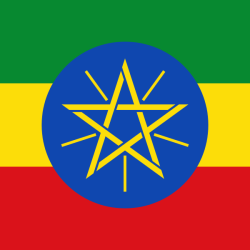
Ethiopia is a federal democratic republic whose federal executive is led by the Prime Minister. The President is the head of state, while the Prime Minister leads the federal government and the Council of Ministers. This page provides an updated reference list of Ethiopia’s federal ministers and selected senior government officials.
Ethiopia Ministers and Senior Government Officials
Position
Officeholder
President
Taye Atske Selassie
Prime Minister
Dr. Abiy Ahmed Ali
Speaker of the House of Peoples’ Representatives
Tagese Chafo
Deputy Prime Minister
Temesgen Tiruneh
Head of the Office of the Prime Minister and Minister of Cabinet Affairs
Alemtsehay Paulos
Minister of Foreign Affairs
Gedion Timothewos Hessebon
Minister of Defense
Aisha Mohammed Mussa
Minister of Finance
Ahmed Shide
Minister of Justice
Hanna Arayaselassie
Minister of Peace
Mohammed Edris
Minister of Education
Berhanu Nega
Minister of Health
Mekdes Daba
Minister of Innovation and Technology
Belete Molla
Minister of Transport and Logistics
Alemu Sime
Minister of Industry
Melaku Alebel
Minister of Trade and Regional Integration
Kassahun Gofe Balami
Minister of Revenues
Ayenalem Nigusse
Minister of Planning and Development
Fitsum Assefa
Minister of Water and Energy
Habtamu Itefa
Minister of Mines and Petroleum
Habtamu Tegegn
Minister of Tourism
Selamawit Kassa
Minister of Agriculture
Girma Amente
Minister of Irrigation and Lowland Areas Development
Vacant / new appointment not yet confirmed
Minister of Urban Development and Infrastructure
Vacant / new appointment not yet confirmed
Minister of Labour and Skills Development
Muferiat Kamil
Minister of Women and Social Affairs
Ergoge Tesfaye
Minister of Culture and Sport
Shewit Shanka
Recent ministerial changes
Two entries appearing on some official diplomatic government pages are no longer current. Prime Minister Abiy Ahmed appointed Abraham Belay as Commissioner of the Ethiopian Nuclear Energy Commission, effective 14 September 2026, after his service as Minister of Irrigation and Lowland Areas. Chaltu Sani was appointed Chief Executive Officer of the Federal Housing Corporation effective 28 September 2026, after serving as Minister of Urban and Infrastructure. Because no replacement minister had been reliably confirmed in the sources checked for this update, those two ministerial positions are marked as vacant/new appointment pending confirmation rather than assigning unverified names.
About Ethiopia’s Government and Ministries
The Federal Democratic Republic of Ethiopia has a federal system of government. The federal executive is headed by the Prime Minister, who works with the Council of Ministers and the Office of the Prime Minister to direct federal government policy and administration. The President serves as head of state.
The Office of the Prime Minister identifies the Prime Minister, Deputy Prime Minister, Council of Ministers, Macro Economic Committee and National Security Council as major structures within the federal administration. The Council of Ministers is responsible for exercising executive powers assigned to it by the Constitution and laws.
The federal ministries
Federal ministries are responsible for major areas of national policy and public administration. The current ministerial structure includes foreign affairs, defense, finance, justice, peace, education, health, innovation and technology, transport and logistics, industry, trade and regional integration, revenues, planning and development, water and energy, mines and petroleum, tourism, agriculture, irrigation and lowland development, urban development and infrastructure, labour and skills development, women and social affairs, and culture and sport.
Ministries implement federal policies, administer programmes, regulate sectors where federal authority applies, and report through the executive branch. Their responsibilities and names can change when the government reorganizes portfolios or appoints new ministers.
Parliament and the federal government
Ethiopia has a bicameral federal parliament consisting of the House of Peoples’ Representatives and the House of Federation. The House of Peoples’ Representatives is the federal legislative chamber whose members are elected by voters. The House of Federation represents Ethiopia’s nations, nationalities and peoples and has constitutional responsibilities that include interpreting the Constitution and deciding certain issues concerning the federal system.
The Prime Minister is drawn from the political party or coalition that holds a majority in the House of Peoples’ Representatives. The President is elected by the House of Peoples’ Representatives for a six-year term.
Keeping the minister list current
Ministerial appointments can change during a government’s term. For that reason, this page is intended as a reference that is updated when reliable government announcements or other authoritative sources confirm a change. Where a recent departure has been confirmed but a replacement has not yet been publicly verified, Soluap does not substitute an unconfirmed name.
Ethiopia Ministers List Ethiopia’s Leadership, Cabinet Ministers: List of Government Officials Ethiopia is a federal parliamentary republic in which executive authority is exercised…
List of Ministers in Ethiopia The President of Ethiopia is Taye Atske Selassie while the Prime Minister: Dr. Abiy Ahmed. Tagese Chafo is Speaker of…
Ethiopia Ministers Council of Ministers, Federal Democratic Republic of Ethiopia, as of 2023 H.E. Demeke Mekonnen Deputy PM and Minister of Foreign…
Ghana’s ministers and ministries list Ghana’s cabinet ministers under President John Dramani Mahama. It reflects latest changes, from the reshuffles of 7 and 26 August…
Singapore ministers and ministries list Singapore’s Cabinet ministers and their portfolios Lawrence Wong: Prime Minister and Minister for Finance Lee Hsien Loong: Senior Minister Gan…
List of Ministers in Trinidad and Tobago A look at the Government of Trinidad and Tobago under Prime Minister Kamla Persad-Bissessar, as sworn in following the 2025…