What does it actually mean for a currency to be “stable”? Simply put, a stable currency holds its purchasing power and avoids wild exchange-rate swings over time. Stability is driven by low inflation, predictable central bank policies, and strong economic fundamentals—meaning the world’s most stable currencies aren’t necessarily the ones with the highest unit value.
While our previous guide covered the most expensive currencies in the world, this list focuses on reliability. Here are the 10 most stable currencies in 2026, plus three contenders to watch.
The official currency of Switzerland and Liechtenstein remains the gold standard for safe-haven assets. Backed by a deeply entrenched banking sector, political neutrality, and disciplined monetary policy from the Swiss National Bank, the franc consistently attracts global capital during periods of economic uncertainty. While Switzerland officially ended its gold-backing requirement in 2000, the country’s massive gold reserves and historically low inflation keep the CHF at the top of the stability rankings.
At first glance, a currency trading at less than a penny against the dollar might seem weak—especially given Japan’s high national debt-to-GDP ratio. However, unit value has nothing to do with stability. As the third most-traded currency on the foreign exchange market after the USD and EUR, the yen boasts massive liquidity. Supported by Japan’s status as one of the world’s largest creditor nations and top holders of gold reserves, the JPY remains a primary safe-haven currency for institutional investors.
#3 – Norwegian Krone (NOK)
Exchange rates: 1 NOK = 0.10 USD | 1 NOK = 0.093 EUR
Norway is one of the few nations in the world with no net public debt, largely thanks to its sovereign wealth fund—the largest on the planet—fueled by North Sea oil and gas revenues. The krone is a free-floating currency not pegged to the euro or dollar. While fluctuations in global crude oil prices can introduce short-term volatility, Norway’s fiscal surpluses and conservative central banking give the NOK exceptional long-term resilience.
Despite joining the European Union in 1995, Sweden opted out of adopting the euro to retain control over its own monetary policy. That independence has served the krona well. Supported by an export-driven economy, low public debt, and strict inflation targeting by the Sveriges Riksbank, the SEK consistently tracks closely with European stability benchmarks while giving Sweden the flexibility to weather regional shocks.
#5 – Euro (EUR)
Exchange rates: 1 EUR = 1.09 USD
As the official currency of 20 EU member states and the world’s second-largest reserve currency, the euro derives its stability from sheer economic scale. Representing one of the largest integrated single markets in the world—and backed by the European Central Bank’s substantial gold and foreign currency reserves—the EUR absorbs localized economic turbulence far better than smaller regional currencies.
Consistently ranked among the strongest currencies in the Asia-Pacific region, the Singapore dollar is managed unlike almost any other major currency. Rather than adjusting domestic interest rates, the Monetary Authority of Singapore (MAS) manages monetary policy by directly guiding the SGD’s exchange rate within an undisclosed trade-weighted band. Combined with Singapore’s AAA credit rating and status as a global financial hub, this framework prevents sharp currency shocks.
#7 – United States Dollar (USD)
Exchange rates: 1 USD = 0.91 EUR
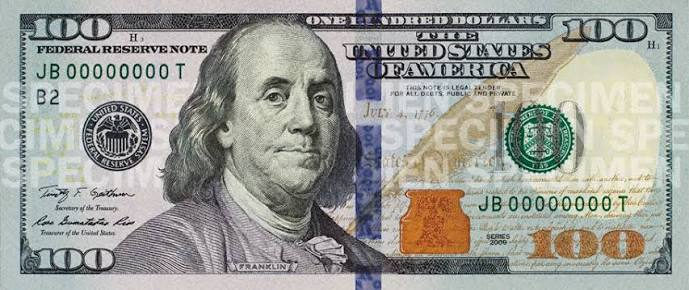
The US dollar is the backbone of global finance, accounting for the majority of international trade, commodity pricing, and central bank foreign exchange reserves. Although the USD left the gold standard decades ago, its stability is anchored by the size of the US economy, deep and liquid Treasury markets, and institutional trust in the Federal Reserve. In times of global crisis, demand for the dollar routinely surges.
Circulating across Australia and several Pacific island nations, the AUD is a classic “commodity currency.” Because Australia is a leading global exporter of iron ore, coal, natural gas, and agricultural goods, the Aussie dollar closely tracks global industrial demand. Decades of uninterrupted institutional stability, transparent governance, and proactive oversight by the Reserve Bank of Australia keep the AUD among the top ten most traded and trusted currencies globally.
The world’s oldest currency still in continuous use, the British pound holds one of the highest unit values among major global currencies. While the GBP has experienced periodic swings tied to domestic policy shifts and global rate cycles, London’s enduring role as a premier global foreign exchange hub—and the pound’s status as the fourth-largest reserve currency—keeps it firmly entrenched as a long-term anchor.
Often called the “loonie,” the Canadian dollar ranks among the world’s top reserve currencies. Its stability stems from Canada’s abundant natural resources—including oil, timber, and critical minerals—paired with a famously conservative and well-regulated banking sector. Because the United States is Canada’s largest trading partner by far, the CAD also benefits from close economic integration with the US market.
Honorable Mentions: 3 Contenders to Watch
Economic shifts constantly reshape currency rankings. While these three currencies sit just outside the top ten, they share many of the same traits as the leaders above:
New Zealand Dollar (NZD) — 1 NZD ≈ 0.55 USD | 0.50 EURNicknamed the “kiwi” after the bird featured on its one-dollar coin, the NZD is one of the eight most-traded currencies on the forex market. It moves closely alongside agricultural commodity prices and the Australian dollar, underpinned by New Zealand’s transparent regulatory environment.
Czech Koruna (CZK) — 1 CZK ≈ 0.045 USD | 0.041 EUR Like Sweden, the Czech Republic is an EU member that has retained its national currency. Managed prudently by the Czech National Bank, the koruna has earned a reputation as one of Central Europe’s most resilient currencies, supported by steady industrial output and low unemployment.
Danish Krone (DKK) — 1 DKK ≈ 0.15 USD | 0.13 EUR Official currency of Denmark, Greenland, and the Faroe Islands (fun fact: Faroese banknotes feature local designs, but they are legally the exact same currency as the DKK). Denmark does not use the euro, yet the krone is tightly pegged to it through the EU’s Exchange Rate Mechanism (ERM II), giving it virtually identical stability to the eurozone.
The Bottom Line on Currency Stability
No currency is completely immune to inflation, geopolitical shocks, or central bank policy shifts. Even the safest currencies fluctuate daily against one another. Rather than looking for a single “risk-free” currency, investors and businesses rely on diversification—balancing safe-haven assets like the Swiss franc and US dollar against resource-backed currencies to protect purchasing power over time.
Top 10 most powerful Idoma people The 10 most powerful Idoma, Igede people are: H.E. Dr. Sam Ode, Mni (Deputy Governor of Benue State) Comrade Senator…
Top 10 Largest Languages in Indonesia Indonesia is home to more than 700 living languages. Here is how the biggest ones rank, based on national data.…
Top 10 Largest Provinces in Indonesia Indonesia’s total land area covers approximately 1,890,179.8 $text{km}^2$, spread across 38 provinces. The scale ranges immensely: The Largest Province: Central…
LIST OF TOP 10 RELIGIONS With the exception of Christianity, the rest are self styled salvation that goes no where ChristianityPrincipal person: Jesus Christ United…